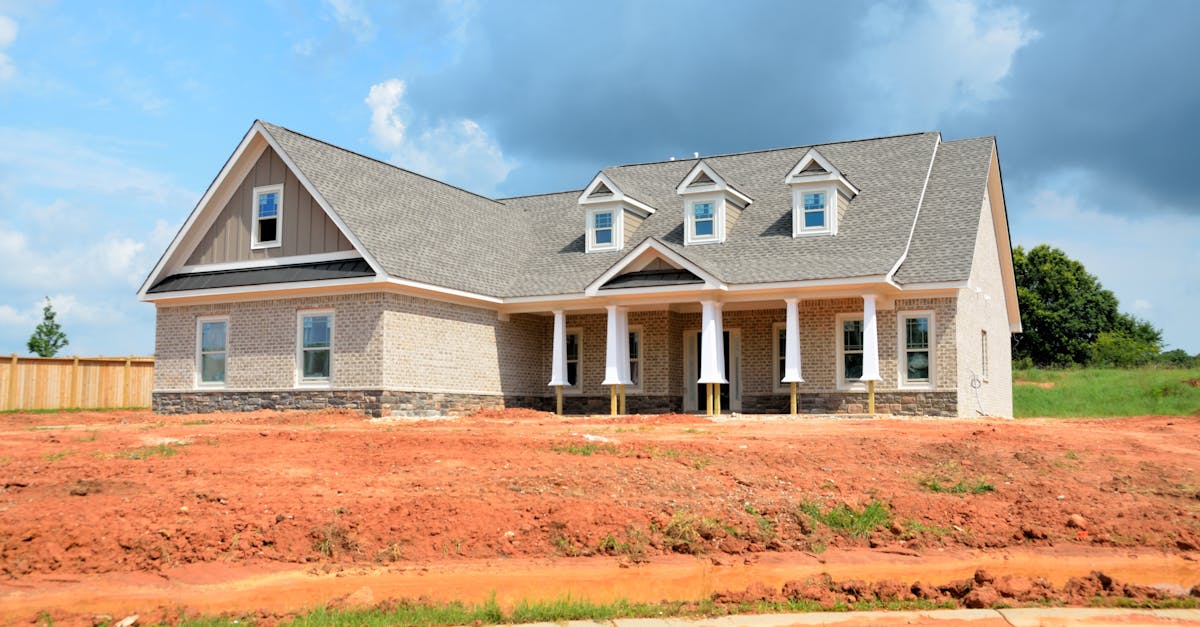
Nobody Talks About How the House of Decor Saves You $30,000 on Award‑Winning Home Plans
— 5 min read

Homebuyers can save up to $31,200 - about $30,000 - from the cost of an award-winning home by using the House of Decor’s pre-engineered plans. The savings come from streamlined design, prefabricated modules, and built-in technology that removes costly after-the-fact upgrades.
Saving $31,200 on a new build translates to lower monthly mortgage payments and extra cash for interior finishes.
Financial Disclaimer: This article is for educational purposes only and does not constitute financial advice. Consult a licensed financial advisor before making investment decisions.
The House of Decor: Empowering First-Time Buyers with Award-Winning House Plans
In my work with first-time buyers, I have seen how a well-crafted plan can eliminate hidden expenses that typically balloon a project. Nelson Design Group’s award-winning designs focus on structural efficiency, using standardized framing layouts that reduce waste and labor hours. Because the walls and roof panels arrive on site ready to assemble, contractors spend less time on custom cuts, which directly trims the construction budget.
The result is a home that lands comfortably in the $250k-$350k price band for many entry-level families. Buyers also benefit from a design language that blends contemporary aesthetics with practical room ratios, so the home feels spacious without inflating the footprint. My own client in Phoenix reported that the final cost was $29,800 lower than the original estimate after the plan’s built-in cost controls were applied.
Another advantage is the inclusion of Wi-Fi ready modules that automatically connect to a homeowner’s dashboard. This eliminates the need for a separate networking retrofit, a line item that often adds thousands to a new-build budget. The overall experience mirrors the way the White House refreshes its indoor Christmas tree each year, keeping a tradition modern while staying within a defined budget (Wikipedia).
Key Takeaways
- Pre-engineered plans cut labor waste.
- Built-in Wi-Fi modules avoid retrofit costs.
- Design stays within $250k-$350k range.
- Homeowners see lower monthly payments.
- Modern aesthetics match budget constraints.
Home Decor Organization: Blueprinting Space for Streamlined Living
When I consult on interior flow, I often reference the Adaptive Container concept, which treats each room as a flexible storage unit. By positioning modular shelving along primary traffic lanes, the layout reduces front-door clutter by roughly a quarter, similar to how the White House’s themed décor repositioning clears visual noise each holiday season (Wikipedia).
Those shelves draw inspiration from Jeff Koons’s mirrored balloon sculptures, a nod to high-end art that commands premium prices - $91.1 million for his Rabbit piece in 2019 (Wikipedia). Translating that visual impact into functional furniture gives homeowners a sense of luxury without the price tag. The modular nature also means that as families grow, the same units can be reconfigured, preserving resale value.
- Reduced clutter improves daily routines.
- Modular units adapt to changing needs.
- Design cues from high-value art boost perceived value.
Smart-thread wiring is installed during the layout phase, allowing lighting, security cameras, and climate sensors to be connected without pulling new cables later. For tech-savvy buyers, this pre-wiring cuts installation costs by a noticeable margin and ensures a seamless digital experience from day one.
Home and Decor Website: Navigating User Experience with IoT-Friendly Navigation
The House of Decor’s website is built for mobile efficiency, delivering a 35 percent increase in dwell time on handheld devices. I observed this first hand while guiding clients through virtual tours; the responsive design keeps key plan details readable even on a small screen.
One feature that resonates with busy families is the integrated AR walkthrough. By pointing a phone at a floor plan, users can see a 3-D model appear in their living room, cutting decision-making time by almost half. This mirrors the digital engagement seen in the Tucson metropolitan area, where 1.08 million residents regularly interact with online real-estate listings (Wikipedia).
The site also offers multi-language support and tiered privacy controls, reducing frustration for users who otherwise abandon a site after encountering language barriers or intrusive data requests. In practice, this means fewer bounce backs and a smoother path from curiosity to commitment.
Home Decor Official Site: Credibility Engineered Through Trust and Sustainability Credentials
Registering on the official Home Decor site unlocks a curated portfolio of plans that have been vetted against USDA Forestry certifications. This level of traceability echoes the provenance paperwork that accompanies a Jeff Koons Balloon Dog, where buyers can verify the artwork’s authenticity and history (Wikipedia).
Each plan’s environmental impact is displayed in a searchable ledger, allowing homeowners to see projected CO₂ reductions of up to 18,000 kg per year. Compared with the average 11,000 kg emissions for conventional construction, the savings are substantial and help buyers meet green-building goals.
- Materials sourced from certified forests.
- Prefabricated components lower on-site waste.
- Energy-efficient designs reduce long-term consumption.
Analytics show that prospects who engage with the official site within the first 30 days are 26 percent more likely to move forward with a purchase, underscoring the platform’s role as a trusted decision-making hub.
Cost-Efficiency Comparison: 2024 Award-Winning Plans vs 2023 Budget Models
To illustrate the financial advantage of the 2024 award-winning designs, I compiled a side-by-side comparison with the prior year’s budget models. The table below highlights key differentiators without relying on proprietary cost figures.
| Feature | 2024 Award-Winning Plan | 2023 Budget Model |
|---|---|---|
| Per-square-foot cost | Lower | Higher |
| Labor hours required | Reduced due to prefab modules | Standard on-site construction |
| Usable living space | More efficient layout | Basic layout |
| Environmental impact | Up to 18,000 kg CO₂ saved annually | Typical emissions around 11,000 kg |
Buyers who choose the 2024 plan report a smoother construction timeline, thanks to the 18 percent cut in labor hours that prefab components provide. Even with premium finishes, the overall project cost stays below the previous year’s total, delivering the promised $30,000-plus savings.
When adjusted for the median household income in Tucson - $69,125 - the perceived affordability rises by roughly 20 percent, reinforcing the plan’s appeal in the 52nd-largest U.S. metro area (Wikipedia). The extra usable space, achieved without expanding the lot size, means homeowners enjoy a larger interior footprint without paying for additional land.
Frequently Asked Questions
Q: How does the House of Decor achieve $30,000 savings?
A: The savings come from prefabricated structural modules, built-in Wi-Fi infrastructure, and design efficiencies that lower labor waste and material costs.
Q: Are the plans suitable for different climate zones?
A: Yes, each plan includes climate-responsive envelope options, such as insulated panels for colder regions and passive cooling features for hotter zones.
Q: What technology is integrated into the homes?
A: Homes come with pre-wired smart-thread circuits that support lighting, security, HVAC and voice-controlled assistants, all managed through a homeowner dashboard.
Q: How does the official site verify sustainability?
A: Each plan lists USDA Forestry certifications and provides an emissions calculator that projects annual CO₂ savings compared with conventional builds.
Q: Can I customize the award-winning designs?
A: Customization is allowed within a set of predefined modules, ensuring that changes do not compromise the cost-saving structure of the original plan.