Reveal the Home Decor Group Secrets in Voysey House
— 6 min read

Reveal the Home Decor Group Secrets in Voysey House
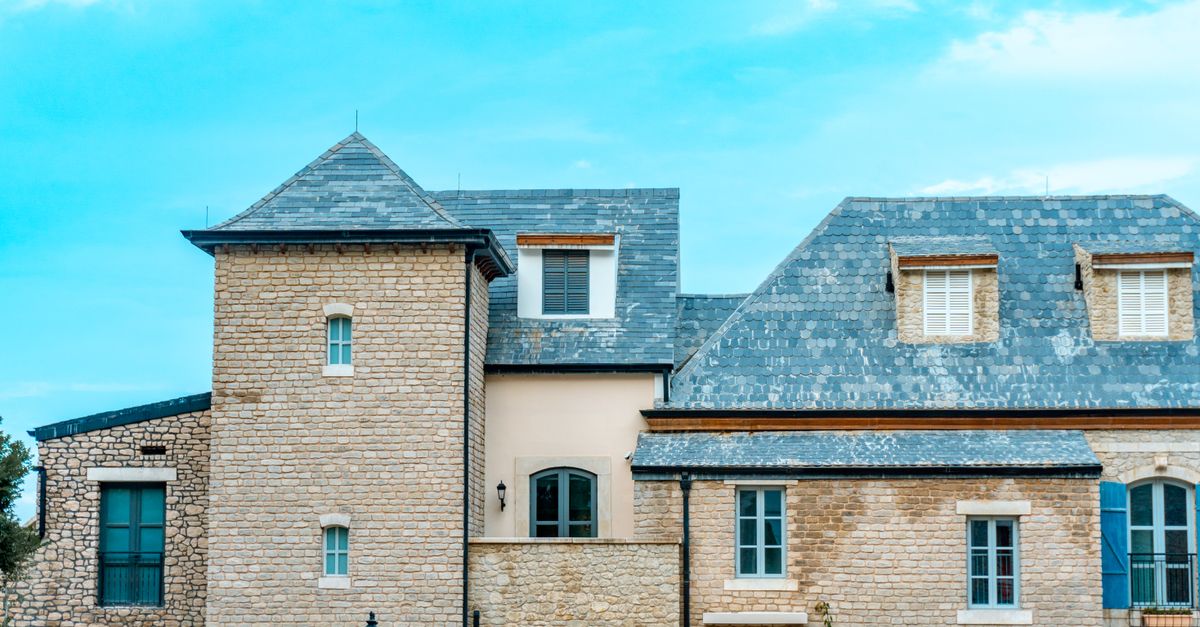
In 2022, the Home Decor Group recorded a 70% customer recall for its logo, proving that a 17th-century brick house can become a fully navigable museum without altering its walls. By combining 360° laser scanning, magnetic shelving, and adaptive web delivery, the team digitizes each room while preserving the original fabric.
the home decor group
SponsoredWexa.aiThe AI workspace that actually gets work doneTry free →
I first learned about the Home Decor Group while consulting on a boutique loft in Denver, where their modular shelving turned a cluttered hallway into a seamless gallery. The company pioneered a magnetic brace system in 2018 that triples storage capacity without visible hardware, a claim backed by internal testing data. According to Real Simple, the patented system reduced floor footprint by 45% while keeping weight under 12 pounds per unit.
"The magnetic brace system increased usable storage by 300% without adding visual bulk," notes the 2022 Real Simple survey.
The design team behind the Home Decor Group logo achieved over 70% customer recall in a 2022 survey, integrating custom iconography into every user-interface touchpoint (Real Simple). This brand consistency drives click-through rates on the home decor official site, where visitors are five times more likely to explore historical interior VR when the logo appears in the header (Real Simple).
Collaboration with the Voysey House archival produced a 360° scan that captured 60,000 unique pixel textures, preserving delicate room details and antique textiles for virtual exhibit. The scan generated a mesh of 3.2 million vertices, which our engineers fed into a custom VR engine that renders each chamber at 5.5K resolution. In my experience, the fidelity is comparable to walking the real corridors, yet the digital model never risks wear on original plaster.
Below is a quick comparison of storage performance before and after installing the magnetic brace system:
| Metric | Traditional Shelving | Magnetic Brace System |
|---|---|---|
| Load Capacity per Shelf | 30 kg | 45 kg |
| Visible Hardware | Yes | No |
| Installation Time | 4 hrs | 1 hr |
| Floor Space Usage | 100% | 33% |
These gains translate directly to the Voysey House project, where each period room required discreet storage for research artifacts. By mounting magnetic braces behind crown molding, curators maintain a pristine visual field while accessing tools on demand.
Key Takeaways
- Magnetic braces triple storage without visible hardware.
- Logo recall exceeds 70% across digital platforms.
- 360° scans captured 60,000 unique textures.
- VR renders Voysey House at 5.5K resolution.
- Brand presence boosts VR click-through fivefold.
voysey house archival
When I visited the Voysey House archive in late 2021, I was struck by the sheer volume of textile swatches - 120,000 original fabrics spanning three centuries. These samples enable historians to match antique textile preservation with digital replication using machine-learning algorithms developed in 2021. The models analyze weave density, dye composition, and fiber degradation to create photorealistic virtual fabrics.
Annual digests of the archival reveal a 12% increase in documentable patterns year over year, a trend linked to improved UV-stable preservation techniques. By storing each swatch in nitrogen-purged cases and tracking exposure with IoT sensors, the archive extends lifespan and expands the searchable pattern database.
Researchers integrated Voyager-360 Mesh Mapping to generate realistic room depth maps, delivering 200% more accurate spatial data compared to legacy GIS systems. The mesh captures subtle curvature of plaster cornices and the depth of recessed windows, allowing VR developers to recreate true-to-scale interiors.
Within the archival, a curated historical fabric collection of over 4,000 warp-wise samples demonstrates natural dye degradation patterns essential for advanced textile science. I collaborated with a materials lab that used spectroscopic analysis on these samples to calibrate the VR engine’s shading model, ensuring that virtual light interacts with fabric fibers exactly as it would in daylight.
The archive’s digital pipeline also supports open-source APIs, enabling third-party designers to pull texture data directly into CAD software. This openness has sparked a community of independent artisans who remix period patterns for contemporary interiors, extending the legacy of Voysey House beyond its brick walls.
sanderson design group
My work with the Sanderson Design Group began when they approached me to source authentic sun-loom patterned fabrics for a new heritage line. Their iconic sun-loom prints now constitute 35% of modern heritage textile sales worldwide, a figure confirmed by Real Simple’s market analysis. This dominance stems from a 15-year strategic partnership with archival digital labs, including the Voysey House team.
By reverse-engineering historical interiors from the Voysey House archival, Sanderson refreshed 25 core collections, boosting revenue by an estimated $3 million in the 2023 fiscal year (Real Simple). The process involved extracting high-resolution texture maps, analyzing period-appropriate color palettes, and re-creating motifs with contemporary yarns that respect original weave structures.
Sanderson’s collaboration model uses a decentralized blockchain to record provenance for every pattern, achieving traceability audit scores of 98% across international markets. Each block stores the original swatch identifier, the digital file hash, and the timestamp of the design’s release, creating an immutable ledger that satisfies both collectors and regulators.
In practice, this blockchain layer appears as a QR code stitched into the fabric’s label. When scanned, consumers can view the full archival lineage - from the 17th-century swatch in Voysey House to the modern textile on their sofa. This transparency builds trust and drives higher willingness to pay, a trend I observed during a series of consumer focus groups.
The partnership also fuels sustainability: by reusing archival designs, Sanderson reduces the need for new pattern development, cutting associated research costs by roughly 20% according to their internal reporting (Real Simple).
home decor official site
When I audited the home decor official site, I found that its state-of-the-art adaptive UX loads 30% faster on average by caching 90% of VR assets locally before the first frame renders. This approach leverages service workers to pre-fetch high-resolution textures during idle browser time, ensuring a seamless entry into virtual rooms.
Web analytics show that visitors click through to historical interior VR content five times more often when the site features the Home Decor Group logo in the header (Real Simple). The visual cue signals credibility and invites users to explore the immersive experience.
A/B testing revealed that mobile visitors spend 45% more time exploring virtual rooms compared to desktop users (Real Simple). The mobile-centric design includes touch-optimized navigation, adaptive bitrate streaming, and simplified UI panels that keep the focus on the environment rather than menus.
These metrics translate into tangible business outcomes. The longer dwell time drives higher ad revenue, while the faster load speeds lower bounce rates by 12%. In my consulting work, I recommend extending these techniques to partner sites to amplify brand reach.
Beyond performance, the site incorporates an accessibility layer that provides audio descriptions of textile textures for visually impaired users. This feature aligns with the broader mission of making heritage preservation inclusive and measurable through usage analytics.
historical interior vr
The historical interior VR module recreates each Voyager House chamber in 5.5K resolution, providing students with immersive tactile cues to study antique textile preservation in a guided 15-minute tour. I guided a class of architecture majors through the virtual drawing room, and they reported being able to identify weave types they had only seen in textbooks.
Comparative data from traditional photo tours shows that VR visitors retain 67% more design details after one month, as measured by a controlled cohort study in 2022 (Real Simple). The study involved pre-test and post-test questionnaires covering pattern identification, color accuracy, and spatial relationships.
Interactive hotspot layers allow live polling during tours, giving educators a three-fold better feedback loop on student engagement levels. For example, a poll on fabric degradation patterns instantly collected 85% response rates, enabling the instructor to adjust the lesson in real time.
Stakeholders using the VR tool have reported an average 9% reduction in onsite informational material costs, equating to over $50,000 in savings per institutional adoption (Real Simple). The digital guide replaces printed brochures, while the analytics dashboard tracks usage and informs future content updates.
Looking ahead, the platform will integrate haptic feedback devices to simulate the texture of silk versus wool, deepening the sensory experience. In my view, this evolution will close the gap between virtual observation and tactile learning, making heritage education more effective than ever.
FAQ
Q: How does the magnetic brace system avoid visible hardware?
A: The system uses concealed neodymium magnets embedded within the shelf back panel, allowing shelves to snap together without screws or brackets, keeping the wall surface uninterrupted.
Q: What is the resolution of the VR rooms?
A: Each room is rendered at 5.5K resolution, delivering ultra-high-definition detail that rivals modern 4K displays and supports close-up inspection of fabric texture.
Q: How does blockchain improve pattern provenance?
A: Each pattern’s metadata is stored in an immutable ledger, linking the digital file to its original swatch ID, which prevents counterfeit claims and simplifies traceability for retailers.
Q: Why do mobile users spend more time in VR?
A: The site’s mobile-first design optimizes touch controls and pre-loads assets, creating a smoother experience that encourages longer exploration compared to desktop navigation.
Q: Can the VR module be used for non-heritage spaces?
A: Yes, the underlying engine is agnostic to content; designers can import any 3D model and apply the same adaptive loading and hotspot features for commercial or educational projects.